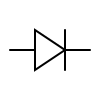
A diode allows current to flow in only one direction. The symbol is a triangle pointing toward a vertical line (bar), where the triangle represents the anode and the bar represents the cathode. Diodes are fundamental in rectification and signal processing.
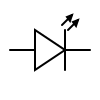
An LED (light-emitting diode) emits light when forward-biased. The symbol is a standard diode triangle and bar with two small arrows pointing outward, representing emitted photons. LEDs are used for indicators, displays, and lighting.
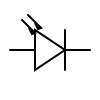
A photodiode converts light into electrical current. The symbol resembles a standard diode with two inward-pointing arrows representing incoming light. Photodiodes are used in optical communications, light sensors, and solar cells.
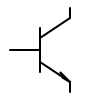
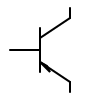
An NPN transistor amplifies or switches electronic signals. The symbol shows a vertical bar (base) with two angled lines — the emitter has an arrow pointing outward. NPN transistors are the most common type in digital and analog circuits.
A PNP transistor is the complement to the NPN type. The symbol is similar to the NPN but with the emitter arrow pointing inward toward the base. PNP transistors conduct when the base voltage is lower than the emitter.
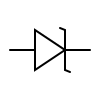
A Zener diode is designed to operate in reverse breakdown at a specific voltage. The symbol is similar to a standard diode but with bent edges on the cathode bar. Zener diodes are used for voltage regulation and reference circuits.